
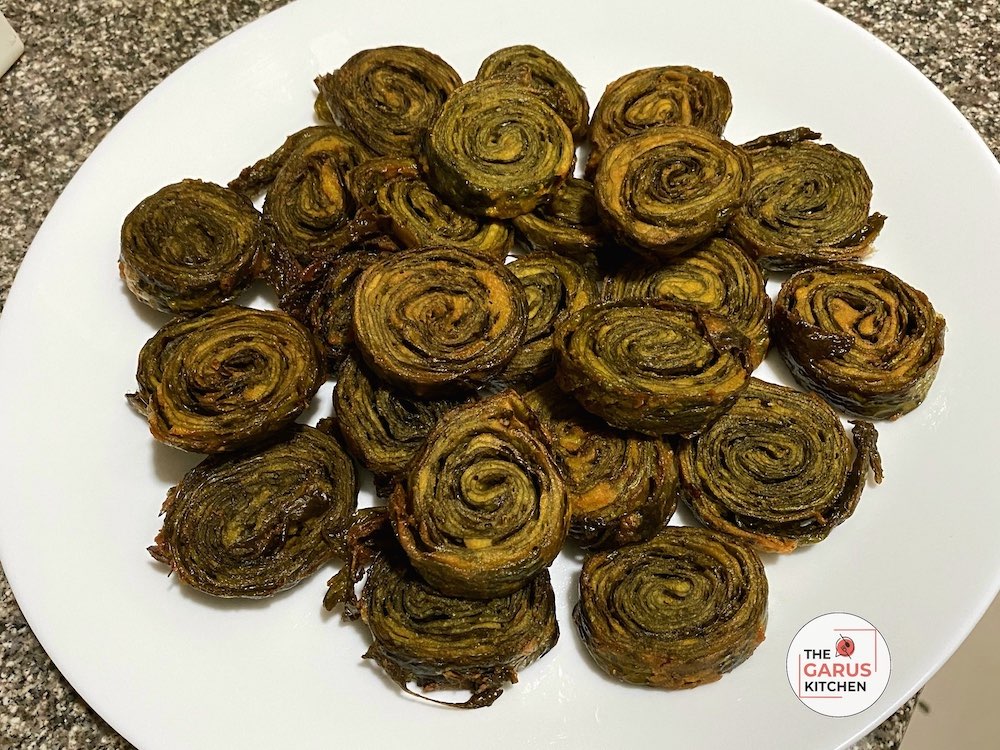
About Arbi Ke Patode Recipe
Arbi ke patode recipe | Rikwach recipe | Colocasia leaves roll recipe | Steamed taro leaves recipe | Crispy arbi ke patte | How to make Rikwach | Colocasia leaf Pakora Recipe with step by step recipe and video: Arbi ke patode recipe is a beloved traditional Indian dish made by layering tender taro leaves (colocasia) with a spiced gram flour paste, rolling them tightly, steaming to perfection, and frying until golden and crisp.
Known by various names such as Rikwach, Patra, Colocasia leaves roll, Steamed taro leaves, Crispy arbi ke patte, or Arbi ke Patte ke Pakode across different regions of India, this colocasia leaves roll snack offers a delightful interplay of earthy, savory, tangy, and spicy flavors in every bite. Making them at home from scratch brings out a unique, rich texture that store-bought snacks simply cannot match.
Preparing these delicious rolls requires attention to detail, especially when selecting and treating the leaves. Fresh, tender arbi leaves are crucial as older leaves can cause a mild scratchy or itchy sensation in the throat due to calcium oxalate crystals. Paired with aromatic spices like ajwain, coriander, and turmeric, along with an essential dose of sourness from amchur (dry mango powder) or lemon juice, the batter completely neutralizes any potential harshness while binding the dish together seamlessly.
Serving Suggestions & Versatility
Whether served as a fiery afternoon tea-time snack or paired as a side dish with a simple meal of dal and rice, these rolls deliver an unbeatable crunch on the outside while remaining tender on the inside. You can either shallow-fry rikwach for a classic bite, air-fry them for a lighter alternative, or deep-fry them for maximum crispiness.
Why You Will Love This crispy Rikwach Recipe
This tried-and-tested method ensures your Rikwach or taro rolls hold their shape without falling apart during steaming, giving you perfect pinwheel slices every time. Follow this foolproof guide to master the proportions, master the rolling technique, and enjoy non-itchy, incredibly flavorful arbi ke patode at home.
More Delicious Starter Recipes to Try!
Pan Fried Rice Paper Dumplings
Restaurant-style Paneer Tikka
Brinjal Pakodas
Stuffed Paddu
Bread Roll without frying
Recipe Card
Arbi Ke Patode Recipe | Taro Leaves Roll | Rikwach Recipe
Ingredients
For the Colocasia Leaves
- 10-12 Fresh Arbi leaves Colocasia/Taro leaves, medium size
For the Spiced Gram Flour Paste
- 1.5 cups Besan Gram flour
- 3 tbsp Rice flour for extra crispiness
- 1 tsp Carom seeds Ajwain
- ½ tsp Turmeric powder
- 1 tsp Red chili powder
- 1 tbsp Coriander powder
- ½ tsp Garam masala powder
- 1 tbsp Amchur / Dry mango powder or juice of 1 whole lemon
- 1 tbsp Ginger-green chili paste
- ½ tsp Asafoetida / Hing
- Salt to taste
- Water as needed approx. ¾ cup
For Tempering & Frying
- Mustard oil or any cooking oil for frying
- 1 tsp Mustard seeds Rai
- 1 tbsp White sesame seeds Til
- 8-10 Curry leaves
Instructions
- Prep Leaves: Wash and dry 10-12 arbi leaves. Flip upside down and trim thick central veins with a knife.
- Make Paste: Whisk besan, rice flour, spices, salt, and amchur with ¾ cup water into a thick paste.
- Layer & Roll: Spread paste over the back of one leaf. Stack 4-5 alternating leaves, spreading paste between each. Fold sides inward and roll tightly into a log.
- Steam: Steam logs in a greased steamer for 18-20 minutes. Cool completely, then slice into ½ inch thick pinwheels.
- Gently slide cooled ½ inch slices into hot oil and deep fry on medium heat for 2-3 minutes until golden brown and ultra-crispy.
- Shallow Fry: Heat oil with mustard seeds, sesame seeds, and curry leaves. Fry slices on medium heat for 2-3 minutes per side until golden and crisp.
🛒 Shop This Recipe: Ingredients & Kitchen Tools
Below are the key ingredients and essential kitchen tools you’ll need to make this healthy, high protein, and flavorful lettuce bean salad at home:
- Fine Besan (Gram Flour)
- Rice Flour
- Amchur Powder (Dry Mango Powder)
- Measuring Spoons
- Steamer Pot
- Sharp Chef’s Knife
- Wide Shallow Frying Kadai
- Ceramic Snack Plates
- Leaf-Shaped Plates with Wooden Tray
- Designer Chutney Serving Set
Step-by-Step Recipe
Step a: Prep the Leaves
1. Wash the 10-12 Fresh arbi leaves thoroughly under cold water and pat them completely dry with a clean towel.
2. Place a leaf upside down on a flat surface. Using a sharp knife, gently trim off the thick central vein and tough side stems running down the back of the leaf. Be careful not to tear the leaf body.
Step b: Make the Spiced Paste
3. In a mixing bowl, combine besan, rice flour, ajwain, turmeric, red chili powder, coriander powder, garam masala, amchur powder, ginger-green chili paste, hing, and salt.
4. Slowly add water a little at a time while whisking to make a smooth, thick, spreadable paste (similar to natural peanut butter consistency). Ensure there are no lumps.
Step c: Layer and Roll
5. Place the largest leaf facedown (dark green side touching the counter, veiny side up) with the tip facing away from you.
6. Spread a thin, even layer of the besan paste across the entire back of the leaf.
7. Place a second leaf on top, facing the opposite direction (tip facing toward you). Apply another layer of paste. Repeat this process for 4-5 leaves to create a stack.
8. Fold the left and right edges slightly inward toward the center to create straight edges. Apply a bit of paste over the folded edges.
9. Starting from the bottom stem end, roll the leaves tightly upward into a dense log. Dab a small amount of paste on the outer edge to seal the seam tightly. Repeat with the remaining leaves to make a second roll.
Step d: Steam the Rolls
10. Heat water in a steamer or a wide pot fitted with a steaming basket.
11. Grease the steaming plate with a few drops of oil. Place the rolls on the plate with the seam side facing down.
12. Cover with a lid and steam on medium-high heat for 18-20 minutes.
13. Insert a toothpick or knife into the center of a roll; if it comes out clean without sticky raw batter, turn off the heat. Allow the rolls to cool down completely to room temperature so they firm up.
Step e-1: Deep Fry the Slices
14. Heat oil in a deep kadai or heavy-bottomed pan on medium-high flame until hot.
15. Test the temperature by dropping a small droplet of batter into the oil; it should sizzle and rise to the top immediately without burning.
16. Once the steamed log has cooled completely, cut it into half-inch thick pinwheel slices using a sharp knife.
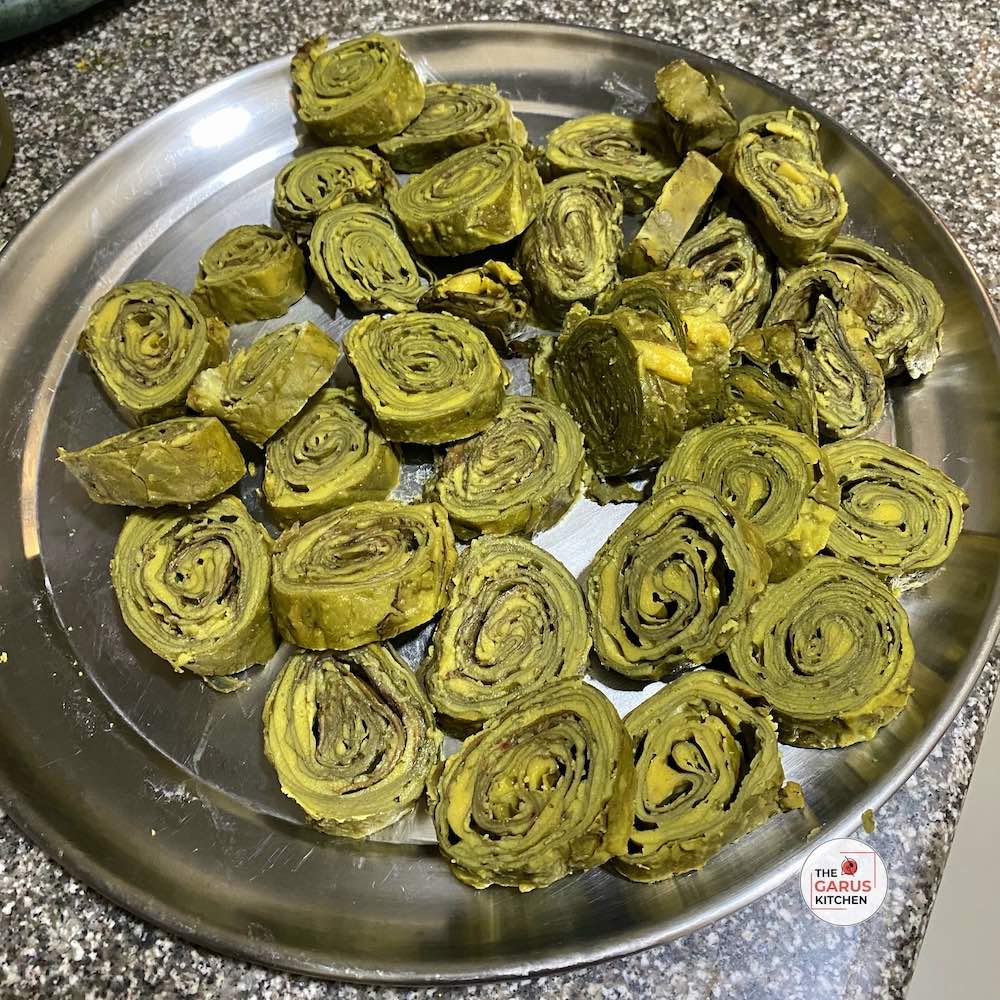
17. Gently slide a few slices into the hot oil, taking care not to overcrowd the pan.
18. Deep fry on medium heat for 2–3 minutes, flipping gently once or twice, until the exterior turns golden brown and ultra-crispy on both sides.
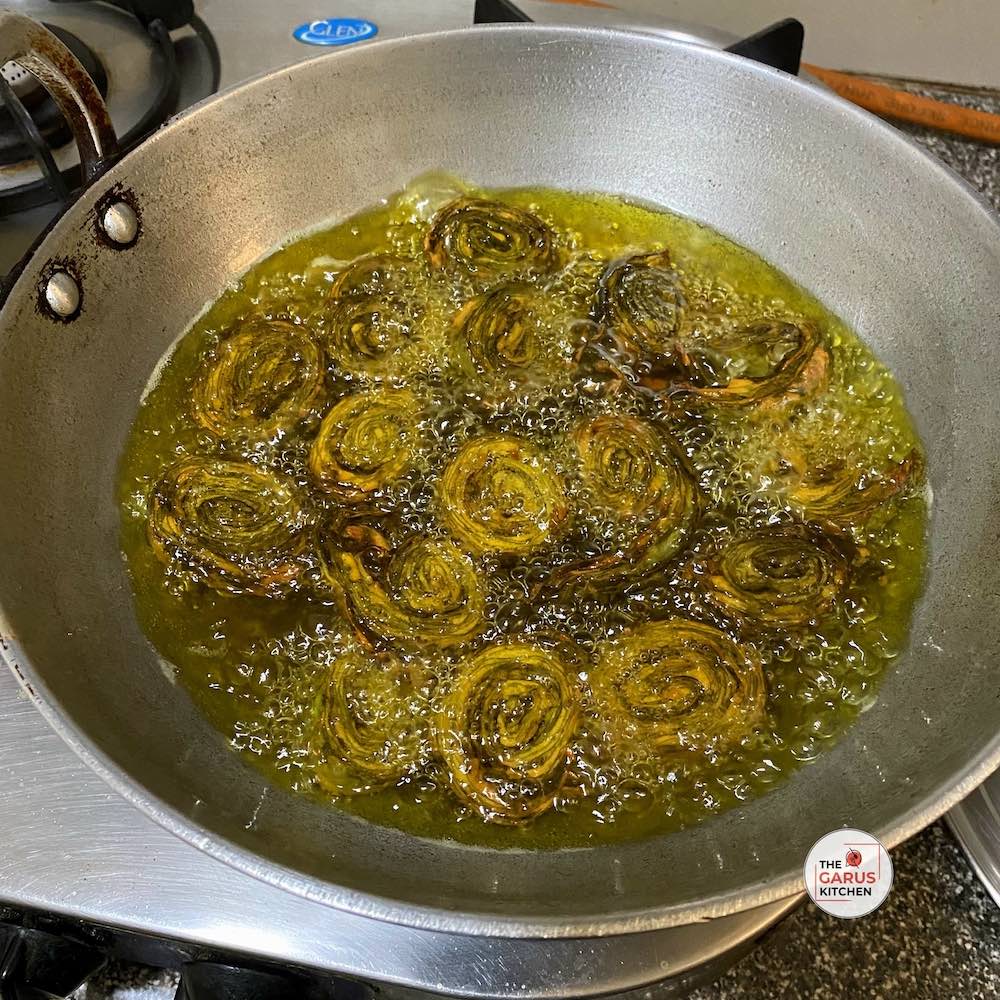
19. Remove with a slotted spoon, drain on paper towels to remove excess oil, and serve piping hot!
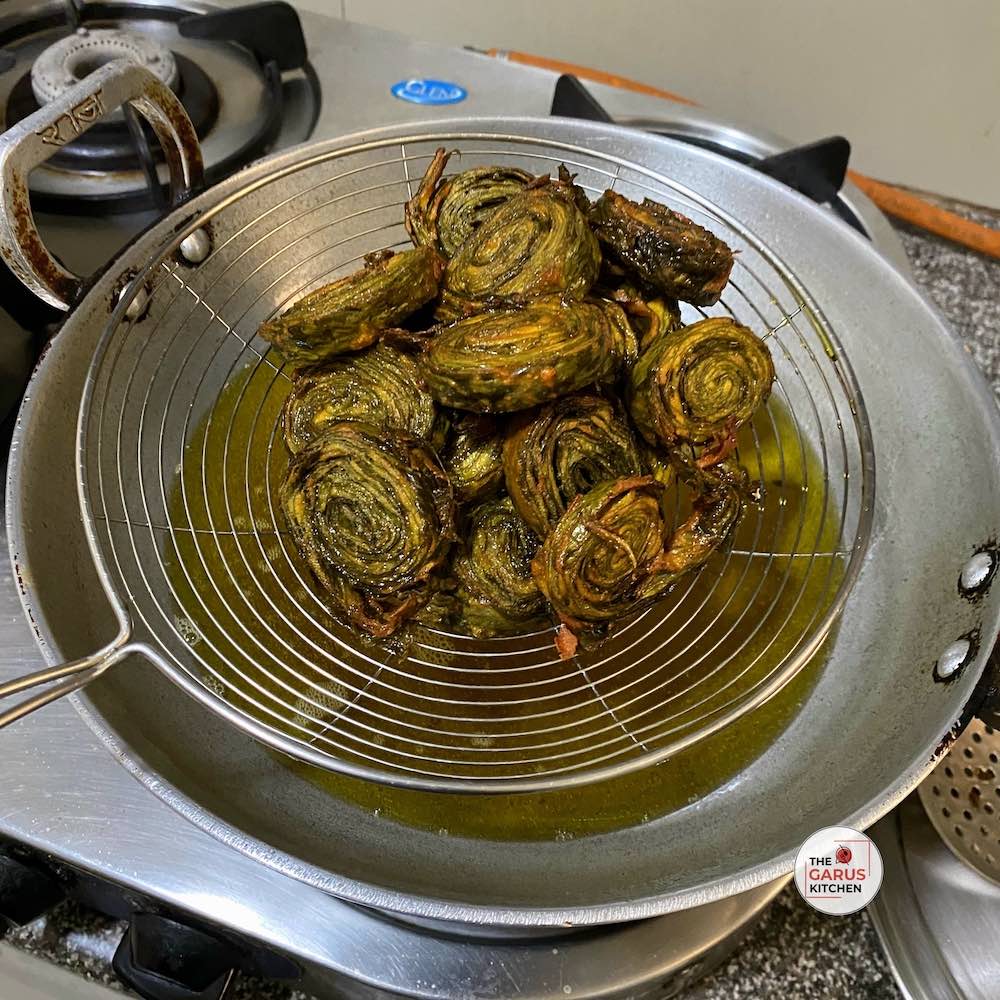
Step e-2: Slice and Fry
20. Once completely cooled, cut the rolls into ½ inch thick slices using a sharp knife.
21. Heat mustard oil in a wide pan until it reaches smoking point, then lower the heat. Add mustard seeds, sesame seeds, and curry leaves. Let them crackle.
22. Arrange the sliced Arbi ke patode in a single layer in the pan.
23. Shallow fry on medium heat for 2–3 minutes per side until golden brown and crisp.
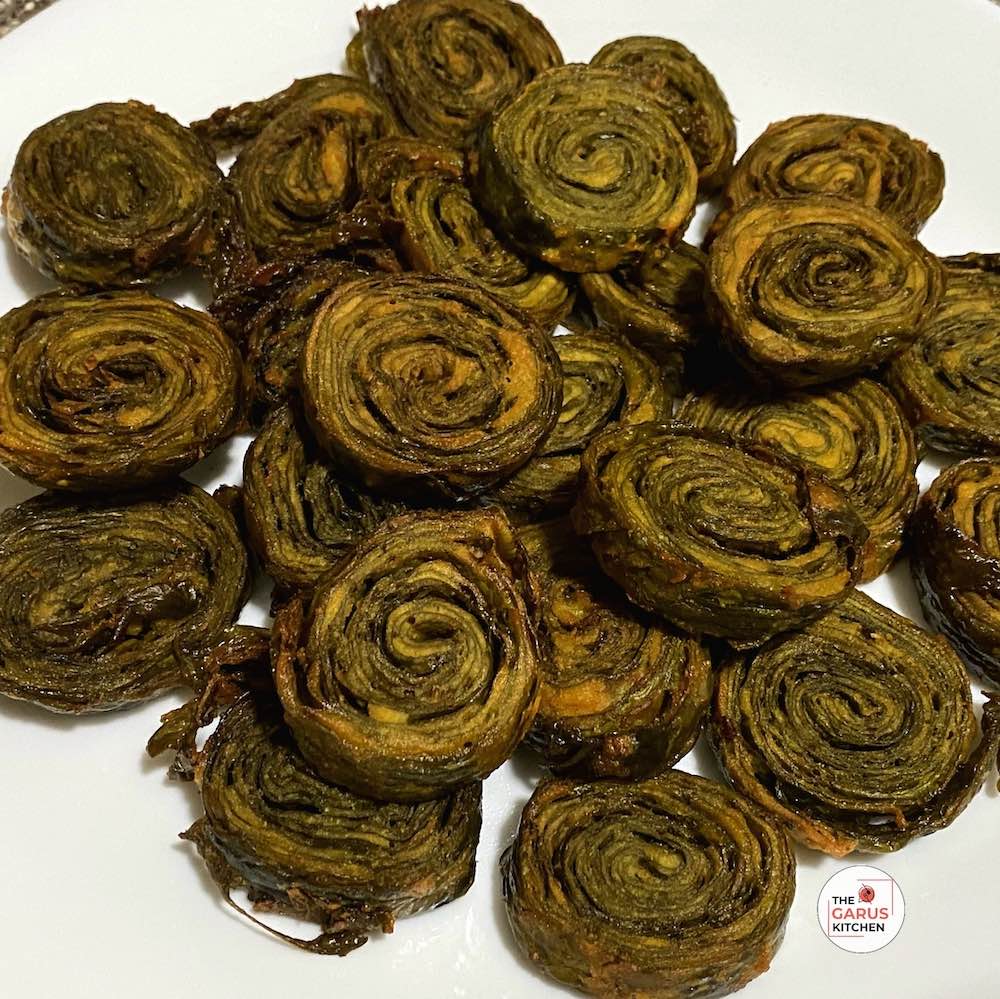
Step f: Serving Suggestions
24. Classic Chai Pairings: Serve hot, freshly fried arbi ke patode with a steaming cup of masala chai or ginger tea. The crisp, spiced pinwheels make an ideal afternoon tea-time snack.
25. Dips & Chutneys: Arrange the golden slices on a serving platter alongside spicy green coriander-mint chutney, sweet and tangy tamarind (imli) chutney, or hot garlic sauce for extra kick.
26. Traditional Main Course Side: Pair these crispy rolls as a savory side dish with a comfort meal of steamed basmati rice and yellow dal fry, or enjoy them alongside hot parathas or puris.
27. Garnish for Presentation: Right before serving, sprinkle extra toasted white sesame seeds, finely chopped fresh coriander leaves, and a light dash of chaat masala over the hot Arbi Ke Patode to enhance visual appeal and flavor.
Tips and Tricks for authentic Arbi Ke Patode Recipe
1. Neutralize Throat Itchiness: Always use a generous amount of souring agents like amchur powder, tamarind pulp, or lemon juice in the batter. The acidity breaks down the microscopic calcium oxalate crystals in taro leaves that cause throat irritation.
2. Master the Batter Consistency: Keep the besan paste thick. If the batter is too thin or watery, it will run off the leaves, preventing them from sticking together cleanly and making the rolls soggy.
3. Cool Before Slicing: Never slice the rolls while they are hot out of the steamer, as the warm batter will stick to the knife and crumble. Cooling them down completely (or chilling them in the fridge for 15 minutes) ensures clean, sharp pinwheel slices.
4. Mustard Oil Magic: Shallow frying in mustard oil gives these patode their signature earthy aroma and authentic North Indian taste.
You Might Also Like My Other Recipe Categories
North Indian Recipes
South Indian Recipes
Punjabi Recipes
Jain Recipes
Street Food Recipes
Frequently Asked Questions (FAQs)
Q1. Why do arbi leaves cause throat itching, and how can I fix it in this recipe?
Ans: Taro leaves naturally contain calcium oxalate crystals, which can cause a scratchy or itchy sensation in the throat if not prepared correctly. To completely neutralize this, always add a generous amount of an acidic agent-such as dry mango powder (amchur), lemon juice, or tamarind pulp-directly into the besan batter. Additionally, trimming away the thick, tough back veins of the leaves and steaming the rolls thoroughly ensures a smooth, non-irritating taste.
Q2. Can I make arbi ke patode in advance or freeze them for later?
Ans: Yes, these rolls are great for meal prep! You can steam the logs, let them cool completely, and store them whole in an airtight container in the refrigerator for up to 3 to 4 days. When ready to serve, simply slice the chilled log into pinwheels and shallow-fry, air-fry, or deep-fry them fresh. For longer storage, freeze the steamed log (or pre-sliced pinwheels separated by parchment paper) for up to a month, thaw in the fridge overnight, and fry until crisp.
Q3. How do I prevent my colocasia rolls from falling apart while slicing or frying?
Ans: To keep your patode tight and neat, make sure your besan paste is thick (not watery) so it acts as a strong glue between layers. Roll the leaves as tightly as possible, tucking in the sides as you go. Most importantly, never slice the rolls while they are still hot. Allow the steamed logs to cool completely to room temperature or chill them in the fridge for 15 minutes-so the structure firms up before cutting with a sharp knife.