
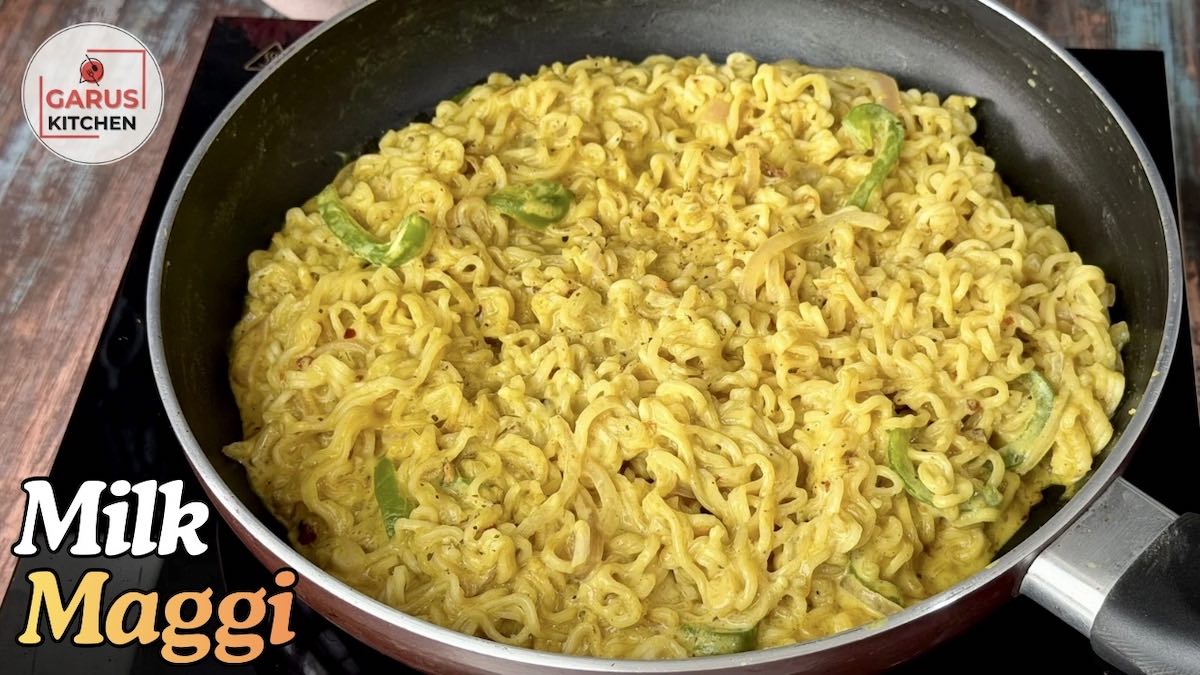
Can “Viral Milk Maggi Recipe: Is It Creamier Than Pasta?” actually beat a classic cafe bowl? The internet is obsessed with boiling noodles in milk, but most people do it wrong and end up with a sweet, curdled mess. Here is the ultimate trick to get that velvety, rich texture without losing that bold, savory masala kick you crave!
About Milk Maggi Recipe
Milk Maggi Recipe | Creamy Cheesy Maggi Recipe | How to make milk maggi with step-by-step photos and video: Imagine pulling a forkful of steaming, glossy noodles from your bowl, coated in a velvety, rich sauce that looks and smells exactly like an expensive cafe-style white sauce pasta.
Now, what if I told you that luxurious texture didn’t come from heavy cream, a classic roux, or hours of simmering, but from a simple carton of milk and a packet of instant noodles? The internet has been completely flooded with the viral milk Maggi trend, leaving millions wondering whether cooking noodles in milk is a brilliant culinary hack or an absolute disaster. Today, we are putting this viral food experiment to the test with an upgraded recipe that will completely change the way you look at a packet of instant noodles.
If you are bored of your regular late-night instant noodles and want to elevate your quick cheat meal game, this viral milk Maggi recipe is the answer. For years, we have all boiled our noodles in water, perhaps throwing in a slice of processed cheese or some leftover veggies at the end to make it special. However, substituting water entirely with milk creates a silky, decadent base that wraps around every single noodle strand. It turns a humble, budget-friendly pantry staple into a premium comfort food experience that easily rivals your favorite Italian pasta dish.
The Common Mistakes & How to Fix Them
The main reason many people hesitate to try making dudh wali maggi is the fear of the unknown – will the milk curdle, will it taste too sweet, or will the texture become unpleasantly sticky? In this post, I am going to break down the exact technique and simple kitchen secrets to ensure your milk base stays completely smooth, glossy, and perfectly balanced. By combining the natural richness of full-cream milk with a punchy aromatic vegetable base, we can totally eliminate any flat sweetness and instead highlight the savory, spicy notes we love.
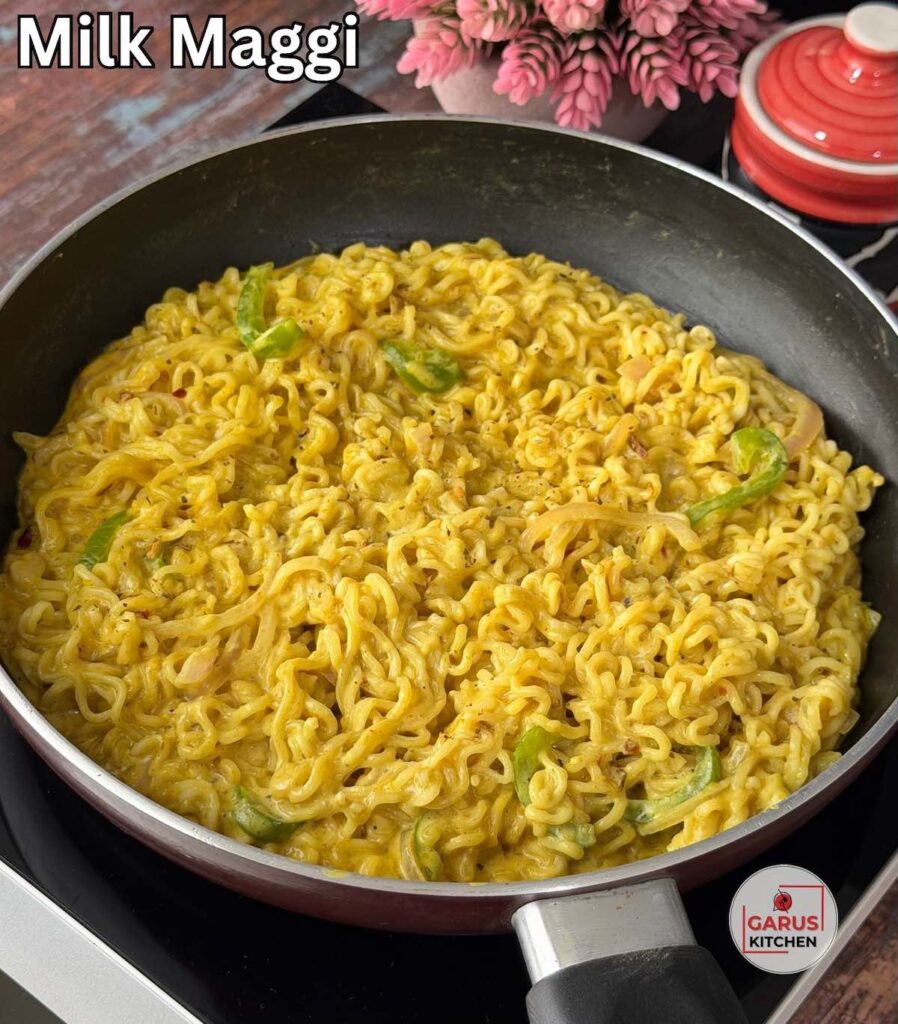
What truly sets this specific version apart from the basic social media trend is our custom flavour-balancing strategy. We aren’t just boiling noodles in plain milk; we are building an aromatic foundation using sliced onions, vibrant julienned capsicum, and classic Italian herbs. Best of all, we are using a specific, tested spice-to-liquid ratio featuring an extra masala packet to ensure the final dish tastes incredibly bold, chatpata, and thoroughly satisfying from the very first bite to the last.
Milk Maggi Video Recipe
More Delicious Noodle Recipes to Try!
Veg Tofu Korean Noodle Soup
Mango Maggi
Noodle Spring Rolls
Masala Oodles
Veg Hakka Noodle
Street style Maggi
Recipe Card
Milk Maggi Recipe | Creamy Cheesy Maggi Recipe
Ingredients
- 1 tsp Oil
- ½ medium Onion sliced
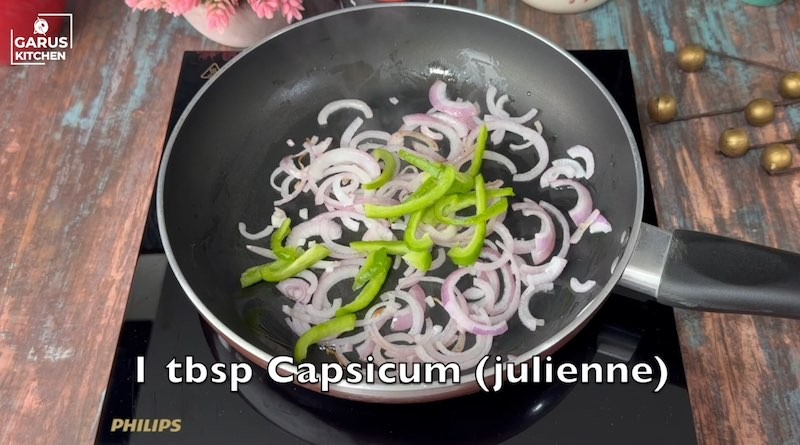
- 1 tbsp Cpasicum julienne
- ½ tsp Chilli Flakes
- ½ tsp Oregano
- 450 ml Milk
- 2 pack Maggi with extra 1 pack extra maggi masala
- 1 ½ tbsp Cheese grated
Instructions
- Saute Aromatics: Heat 1 tsp oil in a pan. Saute sliced onion and julienned capsicum for 30 seconds until translucent.
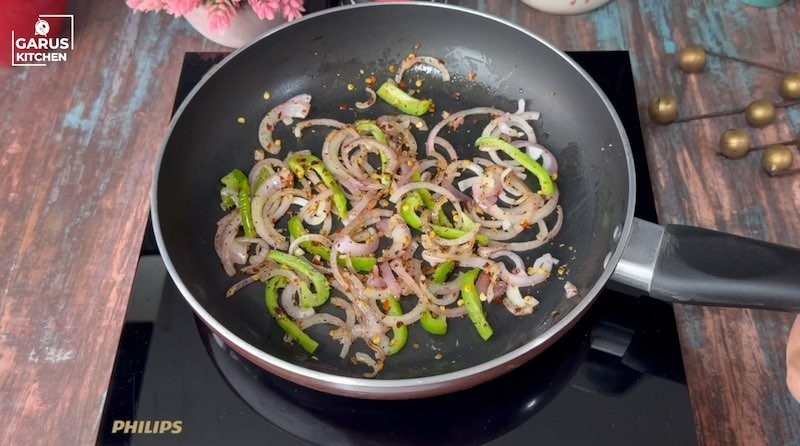
- Bloom Herbs: Stir in ½ tsp chilli flakes and ½ tsp oregano directly into the warm oil for 20 seconds to release their aroma.
- Simmer Milk: Pour in 450 ml milk. Lower the heat to medium-low and stir continuously to prevent the milk from curdling.
- Cook Noodles: Add 2 packs of Maggi noodles, 2 tastemakers, and 1 extra masala sachet. Simmer for 3–4 minutes until thick and creamy.
- Cheesy Finish: Turn off the flame, stir in 1 ½ tbsp grated cheese until melted, and serve hot with a final pinch of oregano.
🛒 Shop This Recipe: Ingredients & Kitchen Tools
To get the perfect, velvety texture and rich flavor without any curdling, here is the exact gear and ingredients used in the Garus Kitchen studio:
- Maggi 2-Minute Masala Noodles – The classic base for this viral recipe.
- Maggi Masala-e-Magic – The secret extra masala sachet used to pack a bold, savory punch and perfectly balance the sweetness of the milk base.
- Premium Chilli Flakes & Dried Oregano – Perfect for blooming in oil to build that savory, cafe-style foundation.
- Cheese – Melts smoothly into the warm milk broth for that signature glossy finish.
- Non-Stick Wide Frying Pan – A wide, heavy-bottomed pan is essential to cook the noodles evenly and prevent the milk from scorching.
- Heat-Resistant Silicone Spatula – Ideal for continuously stirring the milk and scraping down the sides to keep the sauce silky smooth.
- Digital Kitchen Scale – To accurately measure the 450 ml of milk and get the perfect liquid-to-noodle ratio every time.
Step by Step Recipe
Step 1: Sauté the Aromatics
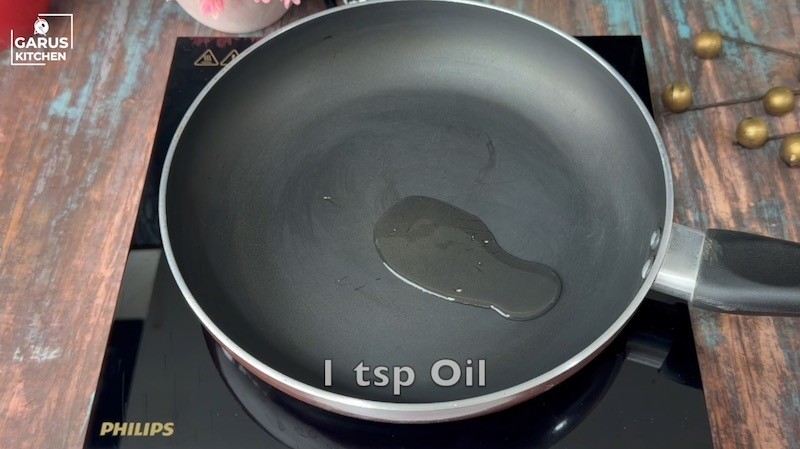
1. Place your cooking pan over a medium flame and add 1 tsp of oil.
2. Once the oil is warm, drop in your ½ medium sliced onion.
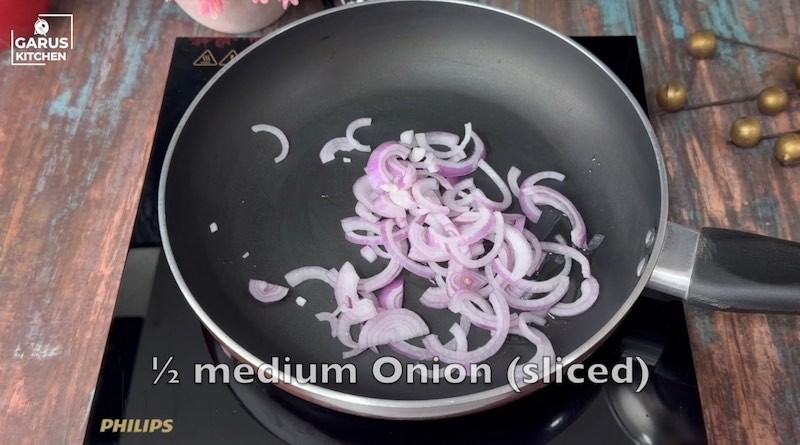
3. Sauté gently for about 20 to 30 seconds just until they turn translucent but still retain a slight crunch.
4. Next, add the 1 tbsp of julienned capsicum and toss them together quickly.
Step 2: Wake Up the Herbs
5. Sprinkle in the ½ tsp of chilli flakes and ½ tsp of oregano directly into the warm oil with the veggies.
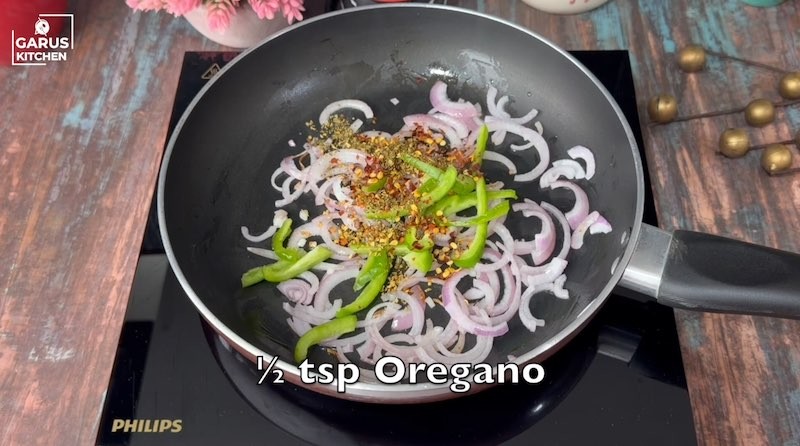
6. Garus Kitchen Pro-Tip: Don’t wait until the end to add your dry herbs! Lightly searing oregano and chilli flakes in warm oil for a few seconds allows their natural essential oils to bloom, infusing the entire fat base with a deep, rustic aroma.
Step 3: Simmer the Milk Base
7. Slowly pour in the 450 ml of milk. Immediately turn the heat down to a low-to-medium setting.
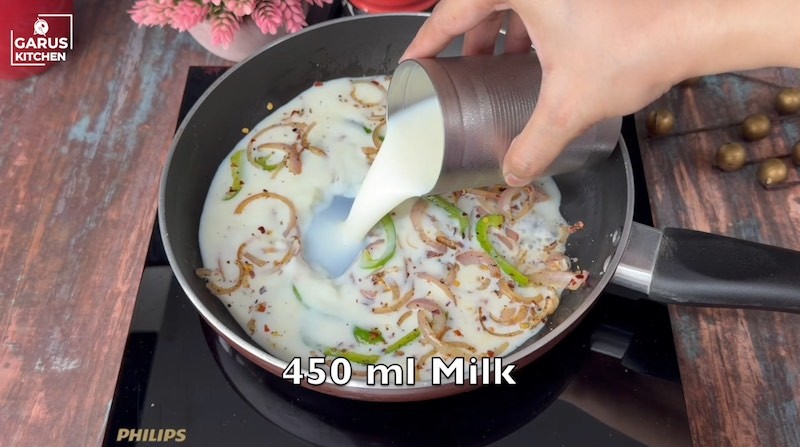
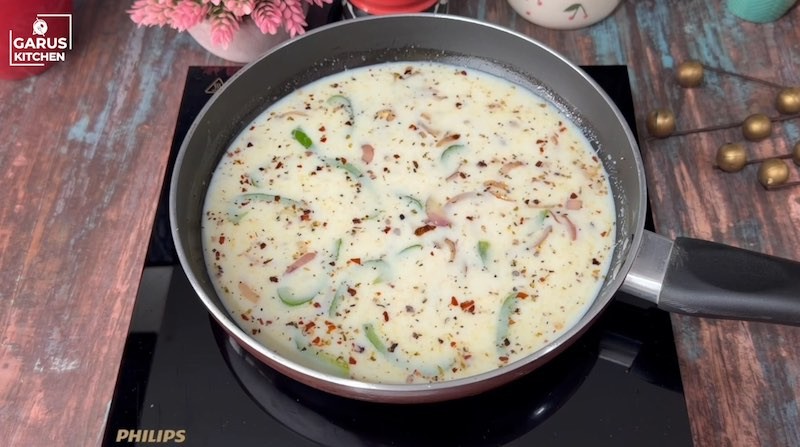
8. Stir the mixture gently and continuously as the milk heats up. Bringing the milk to a very gentle, slow simmer prevents it from scorching at the bottom of the pan or curdling due to the residual heat of the sautéed vegetables.
Step 4: The Masala Dhamaka
9. As soon as you see tiny bubbles forming on the surface of the milk, break your 2 packs of Maggi noodles into the pan.
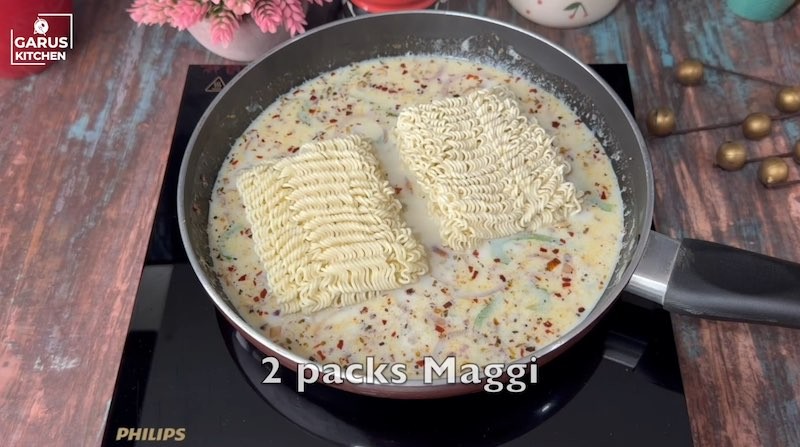
10. Cut open your 2 Maggi tastemakers along with the 1 extra pack of Maggi masala, emptying them all into the liquid. Because milk adds a natural creaminess and dilution, that extra packet of masala is the secret key to keeping the final dish beautifully spicy and well-salted.
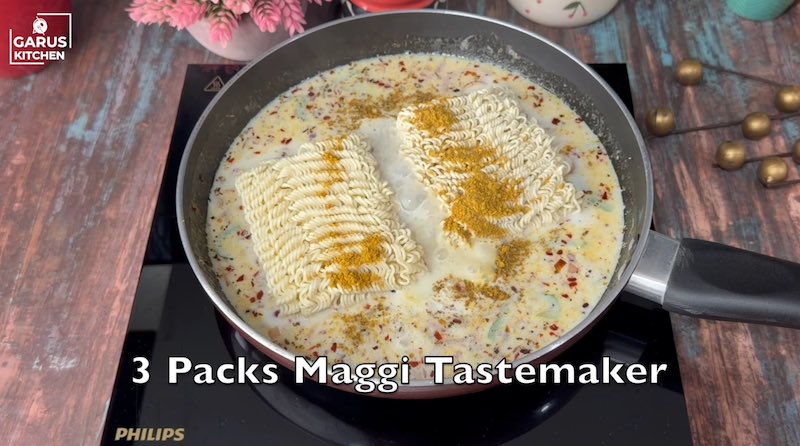
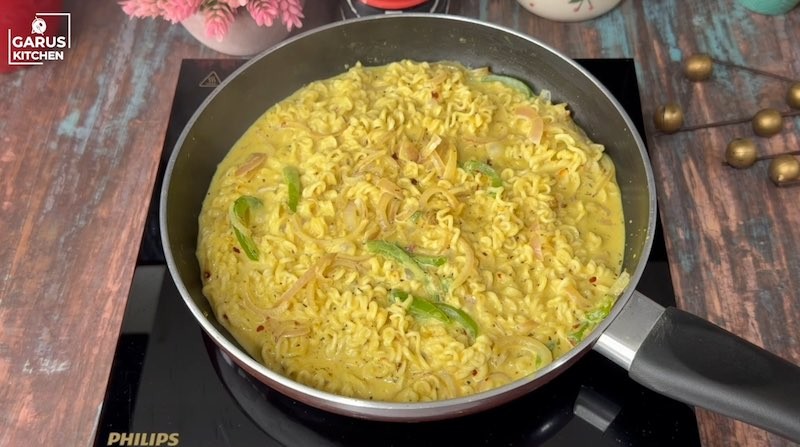
11. Gently press the noodle cakes down and let them cook for 3 to 4 minutes until they absorb most of the liquid and soften.
Step 5: The Cheesy Finish
12. When the noodles are fully cooked and sitting in a thick, velvety sauce, scatter 1 ½ tbsp of grated cheese across the top.

13. Stir it in for just a few seconds and turn off the stove. The residual heat of the creamy pan will instantly melt the cheese, creating an incredibly rich texture.
Step 6: Serving and Presentation
14. Transfer your hot, creamy noodles into a wide serving bowl.
15. To achieve that gorgeous, premium look right before you dig in, simply sprinkle some oregano over the Maggi in the final presentation along with a tiny pinch of extra chilli flakes for color contrast.
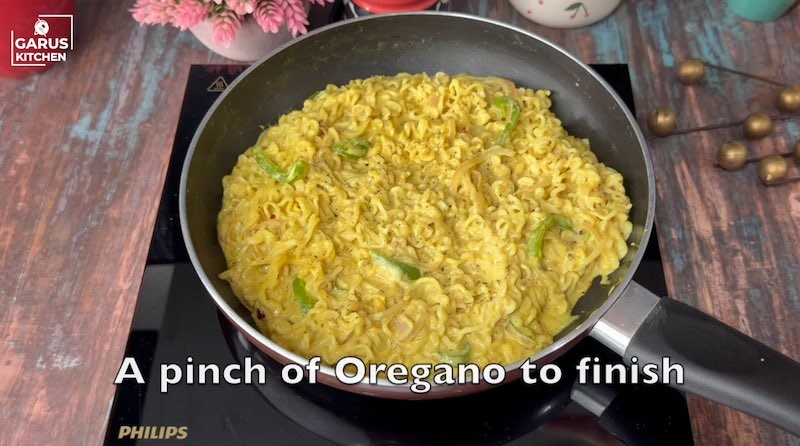
16. Serve it immediately while it is piping hot, and enjoy a cheat meal that tastes exactly like a high-end white sauce pasta!
Tips and Tricks for Viral Milk Maggi Recipe
1. Prevent Milk Splitting (Curdling): Always keep your stove on a low-to-medium flame when adding the milk. Heavy boiling or high heat can cause the milk to curdle instantly when it hits the residual heat of the sauteed onions and capsicum.
2. Bloom Your Herbs in Oil: Instead of adding your dry herbs at the very end, toss the half-teaspoon of oregano and chilli flakes directly into the warm oil with your veggies for just 20 seconds. The warm fat releases the fat-soluble aromatic compounds of the spices, infusing the entire milk base with a deeper flavor.
3. The Final Presentation Trick: To get that signature, premium cafe look, save a small pinch of oregano to sprinkle over the Maggi during the final presentation right in the serving bowl. It instantly elevates the visual appeal and releases a fresh aroma the moment it is served.
4. Fix the Spice-to-Liquid Ratio: Milk adds a natural sweetness and tones down heat. To keep your noodles from tasting bland, use a specific, tested spice-to-liquid ratio by adding an extra masala packet along with your regular tastemakers to cut through the heavy creaminess.
5. Grate Your Own Cheese: Avoid pre-shredded packaged cheese if possible, as it contains anti-caking agents that prevent a smooth melt. Grating fresh processed or mozzarella cheese directly over the hot noodles at the very end ensures it melts seamlessly into a velvety, glossy sauce.
You Might Also Like My Other Recipe Categories
Italian Recipes
Mexican Recipes
World Recipes
Indo Chinese Recipes
Frequently Asked Questions (FAQs)
Q1: Can I use low-fat or skim milk instead of full-cream milk?
A: While you can use skim milk, full-cream (whole) milk is highly recommended for this recipe. This is because skim milk has a much higher water content; consequently, your sauce won’t get that luxurious, velvety thickness. Furthermore, low-fat milk is significantly more prone to splitting or curdling when simmered with spices and vegetables on the stove. Therefore, utilizing full-fat milk is the best way to ensure a rich, foolproof sauce.
Q2: Why does my milk turn watery or thin after adding the Maggi noodles?
A: This usually happens if the noodles aren’t simmered long enough or if too much milk was used. However, this is incredibly easy to fix. As the Maggi noodles cook, they naturally release starch into the pan. Subsequently, this starch acts as a natural thickening agent that bonds beautifully with the milk fats. As a result, letting it simmer gently for an extra 60 seconds over low heat will transform the thin liquid into a rich, glossy gravy.
Q3: Is this recipe too sweet because of the milk base?
A: Not at all! While plain milk has a natural sweetness due to lactose, our flavor-balancing strategy completely neutralizes it. For instance, sauteing pungent aromatics like onions and capsicum helps build a savory foundation. Additionally, blooming herbs in warm oil and utilizing our tested spice-to-liquid ratio ensures the final dish tastes perfectly bold, savory, and delightfully chatpata. Thus, the milk adds creaminess without making the dish sweet.
Q4: Can I add vegetables like tomatoes or lemon juice to this?
A: On the contrary, it is best to avoid highly acidic ingredients like tomatoes, lemon juice, or vinegar in this specific recipe. Because the base is made entirely of milk, adding strong acids will instantly curdle the liquid. In turn, this separates the milk solids and completely ruins the smooth, pasta-like texture of your dish. Instead, stick to non-acidic veggies like capsicum, onions, corn, or mushrooms to keep your sauce perfectly velvety.